Bezienswaardigheden

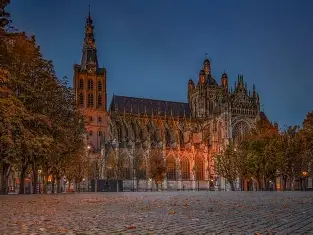
St. John's Cathedral (Sint-Janskathedraal) is one of the most iconic and architecturally stunning churches in the Netherlands. Located in the heart of ’s-Hertogenbosch, this Roman Catholic cathedral is widely regarded as the pinnacle of Brabantine Gothic architecture. Construction of the cathedral began around 1220, originally as a Romanesque church. Over the centuries, it was gradually transformed into a Gothic masterpiece. The cathedral reached its current form by 1530, featuring intricate stone carvings, flying buttresses, and towering stained-glass windows. The west tower, standing at 73 meters, is one of its most recognizable features. St. John’s has endured fires, wars, and periods of neglect. Major restorations took place between 1860 and 1939, and again from 1949 to the present day, preserving its grandeur for future generations. It is now a national monument and remains open to the public for worship, tours, and cultural events.
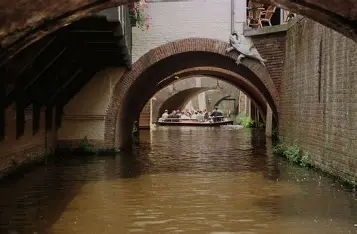
The Dieze is a small but historically significant river in the Dutch city of ’s-Hertogenbosch, located in the province of North Brabant. It originates from the confluence of two other rivers—the Dommel and the Aa—and flows into the Maas River. Though only about 5 kilometers long, the Dieze has played a vital role in the development and character of the city.In medieval times, the Dieze served as a crucial waterway for trade, defense, and daily life. The inner part of the river, known as the Binnendieze, winds through the historic city center, passing beneath houses, streets, and bridges. It was used for transporting goods, draining excess water, and even supplying water for breweries, tanneries, and blacksmiths. Over the centuries, the Binnendieze became neglected and polluted, and in the mid-20th century, there were plans to fill it in and replace it with roads. Fortunately, local efforts to preserve the river succeeded, and today it is a protected heritage site and a beloved tourist attraction.

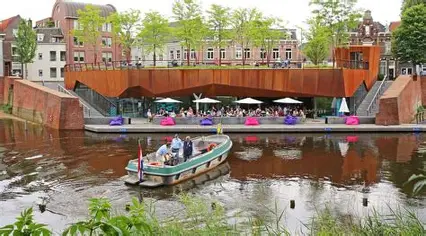
The Bolwerk Sint-Jan is a historic fortification located near the Sint-Jansstraat in the city of ’s-Hertogenbosch, Netherlands. Originally constructed in 1528, this triangular bastion was built to reinforce the city’s defenses at a vulnerable point—the medieval Koepoort, a gate that once served as the main exit toward the town of Vlijmen. In the 16th century, city gates were considered weak spots in urban fortifications. To strengthen this area, the Bolwerk was added along with a new gate: the Sint-Janspoort. Over time, the structure evolved, becoming part of the city’s earthen ramparts in the 17th century. The original gate was eventually reduced to a tunnel-like passage connected by a bridge to a ravelin—a detached outer defense—in the city moat. The current building is a striking example of modern architecture integrated into historical surroundings. Designed by Van Roosmalen Van Gessel Architects, it disappears into the old city wall and features a roof park created by landscape designer Martien van Osch. This green rooftop offers panoramic views and connects the past with the present.

Dag openigstijd sluitingstijd
Maandag Gesloten
Dinsdag-Vrijdag 12:00 21:00
Zaterdag-Zondag 12:00 16:00
17:00 01:00

Beyond the major landmarks, Den Bosch is full of hidden gems: cozy cafés tucked into narrow alleys, quirky boutiques, art galleries, and the famous Bossche Bol pastry waiting to be tasted. Whether you’re wandering through the cobbled streets or relaxing by the river, Den Bosch invites you to explore its beauty at every turn.